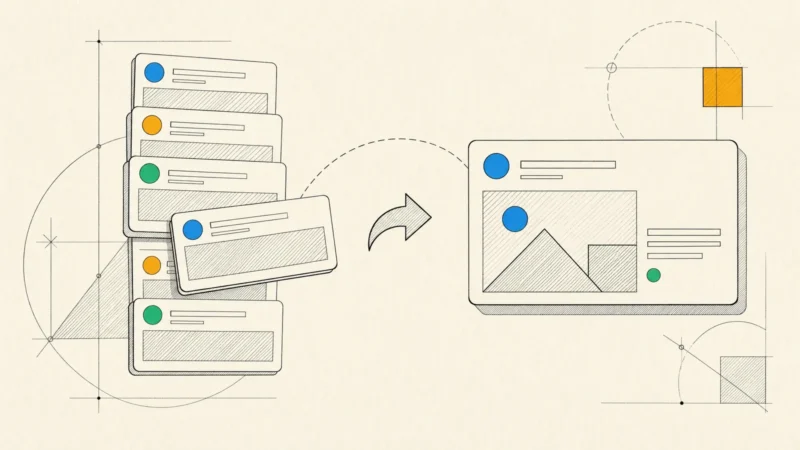
Digital Marketing Services: Analytics, Funnels and Experiments
Engineering-minded digital marketing: trustworthy analytics first, then funnels, paid acquisition, lifecycle email and push, and experiments that show what actually works.
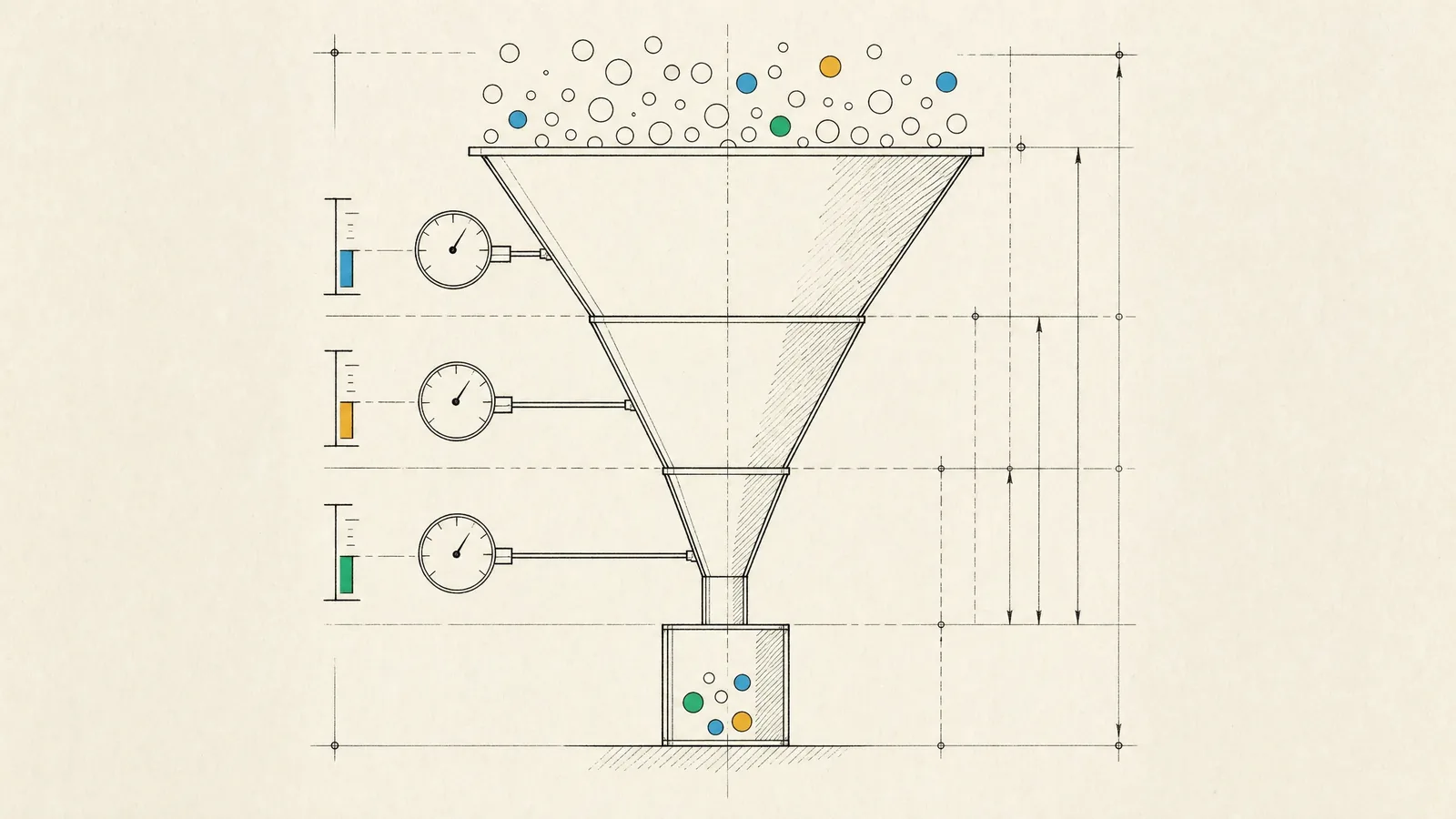
You want to be able to explain your growth: where customers come from, what each one costs, and why they stay. We run our digital marketing services the way we’d work on any other system. Measurement gets fixed first, until you can trust it. Then we look for the constraints in your funnel, and only after that do we spend and iterate where the evidence points.
We work with companies of every size as they move from offline to online, from desktop-only to mobile, or from a single channel to several that work together. Done properly, this looks less like a string of campaigns and more like a well-instrumented product. Each change starts with a hypothesis, results get measured, and what works is scaled.
Analytics first: a tracking plan you can trust
A lot of what looks like a marketing problem turns out to be a measurement problem. The tools disagree with each other, conversions get counted twice, and nobody is sure which campaign drove last month’s sales. We fix that before any more money is spent.
The fix starts with a tracking plan. It’s a short list of the events that matter, such as sign-up, activation, purchase and renewal, and each one gets a clear name, defined properties and an owner. Then we implement it properly:
- The conversions that matter most are sent from your server as well as the browser, so ad blockers and privacy features don’t erase them, and the two sources are deduplicated.
- Consent is enforced in code. Tags only fire once the user has agreed, under whatever privacy rules apply to you, such as the GDPR in Europe or KVKK in Turkey. Your legal team sets the policy, and we implement it faithfully.
- Tracking is tested in staging like any other feature. When an event breaks, it raises an alert instead of quietly disappearing.
- Marketing analytics (Google Analytics, for example) and product analytics, which follows behavior inside your app, share the same user and event definitions. At larger volumes, raw events flow into a data warehouse where they can be joined with revenue.
Attribution comes next, and we treat it with some humility. Each ad platform tends to give itself the credit, so the conversions they report often add up to more than you actually sold. Last-click models have the opposite problem and undervalue the channels that create awareness. So we triangulate between platform data, your own analytics and self-reported attribution at sign-up. Where the budget allows, we add holdout tests that show what would have happened without the spend.
Funnels and conversion rate optimization
Getting prospects to arrive is easier than converting them. We map your funnel one stage at a time, from landing through sign-up, activation, first purchase and repeat purchase, looking for the steps where the most people leave.
A lot of the fixes are unglamorous. Before anyone tests button colors, we check for form validation that rejects valid input, pages that are slow on mobile networks, payment errors, confusing pricing, and landing pages that don’t deliver what the ad promised. Analytics shows where people leave. To see why, we use session recordings with sensitive fields masked, along with short usability tests.
We’re also a product team, so these fixes don’t sit in another company’s queue. Our designers and engineers change the landing page, checkout or onboarding flow themselves, with the same UI/UX design discipline we bring to products. A conversion improvement lowers your cost per acquisition on every channel at once.
Paid acquisition without the waste
Each channel does a different job. Search captures demand that already exists, while social and video create it. Shopping campaigns depend on the quality of your product feed, and app campaigns need a store listing and onboarding that convert. The mix depends on your audience. It can include Google Ads, Meta, Microsoft Advertising, LinkedIn and TikTok, retargeting networks such as Criteo, and regional platforms such as Seznam where your market calls for them.
We often start narrower than clients expect, so that each channel gets enough budget to produce a clear signal. From there, a few principles guide the work:
- The bidding algorithms need good data. Automated bidding optimizes toward whatever conversions you send it, so for lead generation we send qualified leads and closed deals back to the ad platforms. That way they optimize for revenue rather than form fills.
- Brand and non-brand campaigns stay separate. Brand searches convert well and cheaply, and mixed into other campaigns they make weak campaigns look strong.
- On social platforms, creative is the main lever, and we test it systematically.
- Channels are judged on unit economics, meaning cost per acquisition and payback against customer lifetime value. Clicks and impressions don’t decide anything.
When something works, we scale it step by step and watch whether efficiency holds as spend grows.
Lifecycle email and push
Acquiring customers is expensive, and growth compounds when you keep them. Lifecycle messages (email, push notifications and in-app messages) turn product events into timely, useful communication. Think of a welcome sequence, a nudge when someone stalls in onboarding, an abandoned cart reminder, or a win-back message for customers who’ve gone quiet.

Whether these messages arrive, and whether they help, comes down to engineering details:
- Email is authenticated with SPF, DKIM and DMARC. Marketing mail goes out from its own subdomain, lists stay clean, and unsubscribing takes one click. The major mailbox providers now require authentication and easy unsubscribing from bulk senders anyway.
- Transactional messages such as receipts and password resets are kept separate from marketing, in infrastructure and in consent.
- iOS and current Android versions both put push notifications behind a permission prompt. Rather than asking at first launch, we ask when the value is obvious, often after a short screen that explains what users will get.
- Each notification deep-links to the right screen and respects frequency limits. It’s triggered by real behavior, not a fixed schedule.
Every message costs the user some attention, so we count unsubscribes and push opt-outs as costs and use holdout groups to check that a campaign actually changes behavior. Push and in-app messaging are built together with our mobile app development team.
Experiments that produce answers
We only run an experiment if its result could change a decision. Each test is written down before it starts, with the hypothesis, the primary metric, the guardrail metrics that mustn’t get worse, and the sample size needed to detect the smallest effect worth acting on. Running it takes some discipline:

- Tests run for full weekly cycles, so weekday and weekend behavior are both represented.
- We don’t stop a test the moment it looks like a winner. Checking repeatedly and stopping early is a classic way to find an effect that isn’t really there.
- Before trusting any result, we confirm that traffic was actually split as planned.
- Product experiments run behind feature flags, so a losing variant can be switched off without a release.
Low traffic changes the approach. Without the volume to test a small tweak meaningfully, running the test anyway only produces numbers that look like evidence. In that case we make bolder changes, compare before and after carefully and lean on qualitative research. Winning or losing, every experiment goes into a shared log, so the organization learns from it instead of repeating old tests.
How our digital marketing services work
The first step is getting to know your business: margins, sales cycle, customers and what’s been tried before. Then we audit your analytics, fix what needs fixing and agree with you on the few numbers that define success. Planning, execution and iteration come after that, and the channels and messages that work get scaled. We can start from zero or take over campaigns that are already running.
We shape the team around the work. Analysts handle measurement and reporting, engineers take tracking, integrations and landing pages, and designers do creatives and conversion work. Search and social plug into the same plan and reporting, and our SEO services and social media optimization articles cover them in depth. You get regular check-ins and a monthly report that ties spend to outcomes, with what we learned and what we plan to test next.
Your ad accounts, analytics properties and customer lists should belong to your company, with us added as users. That way you stay in control, and the relationship stays transparent.
Paid growth isn’t always the answer. If people who try your product don’t stay, more acquisition just fills a leaky bucket, and activation and retention need to come first. On a small budget, we’d rather do one channel well than spread the money thinly across several.
Frequently asked questions
How much should we spend on advertising?
Enough to get a clear signal from one channel before you add the next. Beyond that, it depends on your margins and how quickly a customer pays back their acquisition cost. That’s why we work out your unit economics before recommending a budget.
Can you work alongside our in-house marketing team?
Yes. Some teams need us for the technical layer, such as tracking, integrations and landing pages. Others want us to run specific channels. We agree on who owns what at the start and report in one shared format.
Which analytics tools should we use?
That depends on your product and data volume. Many companies end up with a marketing analytics tool, a product analytics tool and, eventually, a data warehouse. The choice of tools matters less than a clear tracking plan they all follow.
Can you fix our existing tracking without starting over?
Usually, yes. We audit what’s there, keep what’s reliable, repair or remove what’s broken, and document the result, so your historical data stays usable wherever possible.
How quickly will we see results?
Measurement fixes and obvious funnel repairs pay off quickly. Paid campaigns need a learning period before they settle, and SEO and lifecycle programs compound over months. The monthly report shows where each one stands.
If your tools disagree about your numbers, or you can’t tell which channel pays for itself, send us your current channels and goals, and we’ll begin by looking at how you measure them.